What Is a Bridge Pathway Introduction in Business Networking?
Jun 15, 2026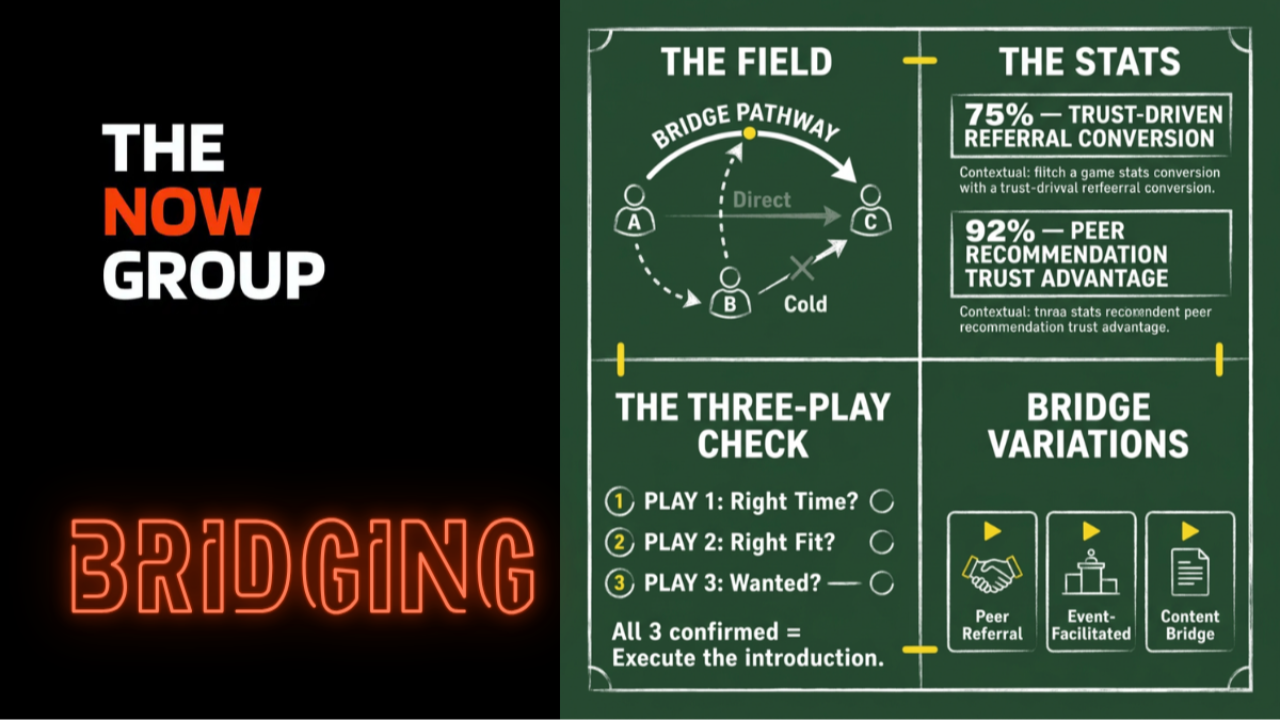
NOW Bridging Pathways - A new way to create value?
A bridge pathway introduction operates on a specific trust mechanism: the bridge's credibility transfers to the person being introduced before direct contact occurs. This is not a standard referral — the bridge does not connect two parties directly. They pre-warm the prospect, establish the frame, and check willingness before any introduction is made. The prospect arrives already contextualised rather than encountering a cold outreach. The result is a conversion rate significantly higher than a direct referral, because the trust gap has been closed before the relationship begins.
What Is a Bridge Pathway Introduction?
Most business introductions happen in one of two ways. Direct — Person A introduces Person B to Person C face-to-face or by email. Cold — Person B reaches out to Person C with no prior connection and hopes the message lands.
A bridge pathway introduction is a third option — and in many cases the most powerful one.
In a bridge pathway, Person A doesn't make the full introduction. They open the channel. They contact Person C on behalf of Person B, establish the context, and — crucially — check whether Person C is open to the connection before it's made.
By the time Person B reaches Person C, the bridge has already done its work. The credibility has already transferred.
Why Does a Bridge Pathway Outperform a Direct Introduction?
Because trust travels with the bridge, not with the introduction.
The data supports this framing. Firework's research shows that 75% of people are more likely to make a purchase based on a word-of-mouth referral from someone they trust — and that 92% of consumers trust recommendations from friends and family over any other form of advertising. A bridge pathway maximises the trust signal by ensuring the prospect hears about the connection first from someone they already know and respect.
The result: higher response rates, faster trust development, and lower risk of the connection being ignored.
What Is the Three-Question Willingness Check?
Before completing a bridge pathway introduction, a skilled bridge runs three checks with the receiving party:
- Is this the right time? — does the prospect have the headspace and context to receive this connection right now?
- Is this the right fit? — does the bridge's description of the connection resonate with the prospect's current priorities?
- Is this wanted? — is the prospect genuinely open to this introduction, or would they engage out of politeness with no real intent?
A yes to all three is the green light. Anything less is a reason to wait, reframe, or reconsider.
How Does a Bridge Pathway Work Inside NOW Group?
Bridge pathway introductions typically happen in three contexts:
Peer referral bridges: a member vouches for another member to a prospect within their existing network. The bridge opens the channel by mentioning the member's value before any formal introduction.
Event-facilitated bridges: at NOW assemblies or roundtables, a facilitator contextualises a connection between two members before inviting them to interact. The facilitator's credibility runs ahead.
Content bridges: a member shares another member's content or methodology with a prospect, pre-establishing credibility. The content travels first. The person follows.
Frequently Asked Questions
Q: What is the difference between a bridge pathway and a standard referral?
A standard referral connects two parties directly — an email introducing A to B. A bridge pathway involves an intermediate step where the bridge contacts the prospect first, establishes the context, gauges willingness, and only then facilitates the connection. The prospect arrives informed and pre-qualified rather than receiving a cold introduction from someone they do not know. The bridge's credibility travels ahead of the connection.
Q: What makes someone a good bridge in a business introduction?
Credibility with both parties, genuine knowledge of what each person needs, and the discipline to run a three-question willingness check before completing the introduction: Is this the right time? Is this the right fit? Is this genuinely wanted? A bridge who skips the willingness check produces introductions that waste everyone's time and damages their own credibility with both parties.
Q: How do bridge pathway introductions work digitally?
Content bridges are the most powerful digital equivalent: sharing someone's work, frameworks, or insights with a relevant audience before making the direct connection. The content travels first — building context and credibility. The person follows when the ground has been prepared. This is why LinkedIn article sharing, podcast mentions, and newsletter features are more powerful introduction mechanisms than a direct connection request.
Q: When should you use a bridge pathway instead of a direct introduction?
When the prospect does not know the person being introduced, when the value of the connection is not immediately self-evident, or when the timing needs to be checked before the introduction is made. High-value introductions — where both parties are busy and selective about their time — almost always benefit from a bridge pathway approach rather than a direct connection email.
→ Related: What is an I-MELD? How NOW structures business introductions for maximum impact
→ Related: What is reciprocal referral networking? How the two-way referral engine works
Sources & References
1. Firework — 32 Referral Marketing Statistics 2024: 92% of consumers trust recommendations from friends and family over other advertising; 75% more likely to purchase based on a trusted word-of-mouth referral. (firework.com/blog/referral-marketing-statistics)
2. Prefinery — Referral Program ROI 2024: trust is the primary driver of referral conversion — 83% trust peer recommendations vs. 33% who trust traditional advertising; the bridge pathway maximises this trust signal. (prefinery.com/blog/referral-program-roi)
3. Journal of Marketing Research — Gershon & Jiang (2024): a simple reminder that a person was once referred increases their own referral behaviour by 21%, demonstrating the compounding nature of trust-based connections. (doi.org/10.1177/00222437241257886)
